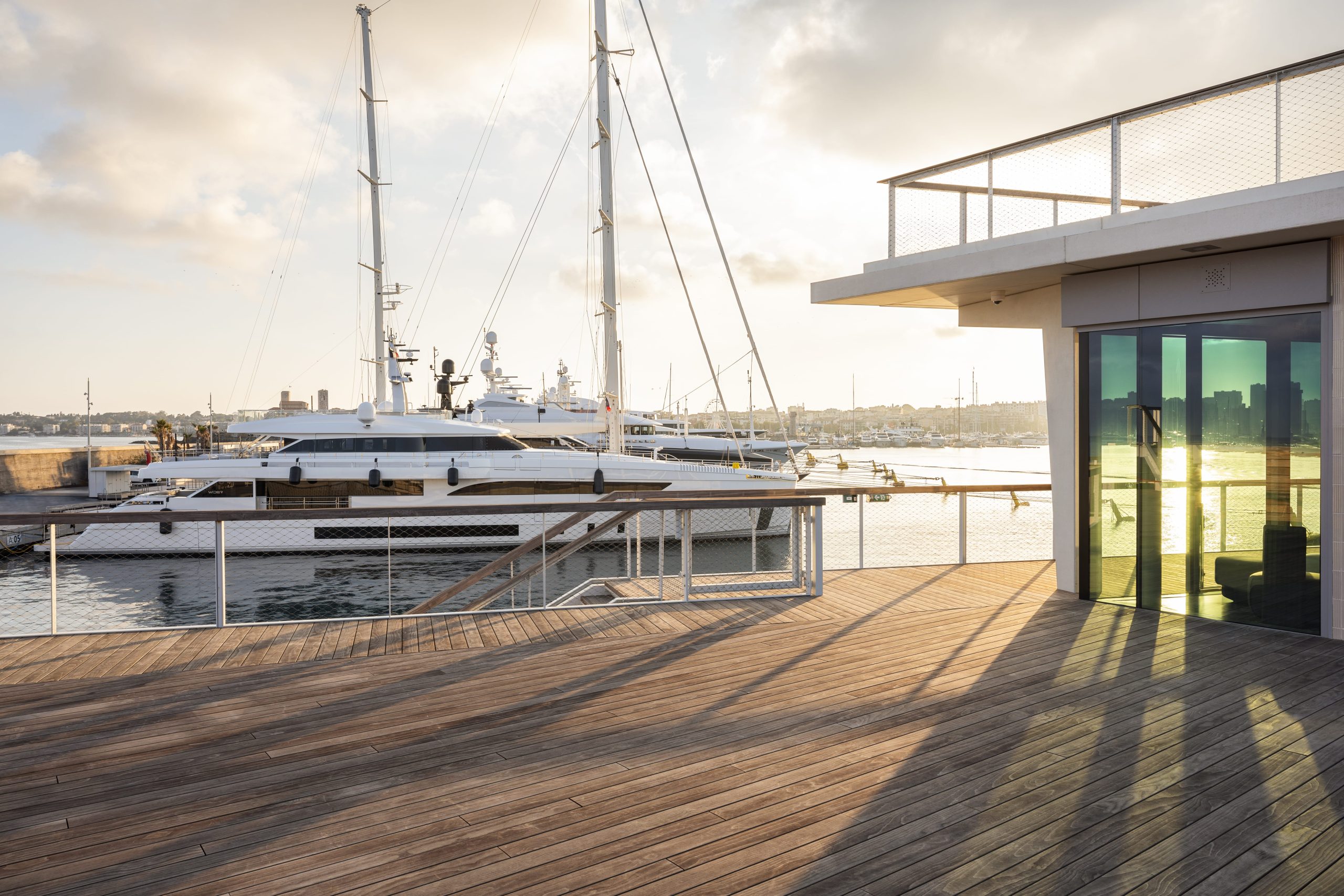
Kebony Clear: the depth of exotic woods, from a 100% plant-based process.
Made from FSC-certified radiata pine and treated with furfurylation — a plant-based alcohol that permanently binds to wood fibers — Kebony Clear combines a deep knot-free brown hue, remarkable stability, and minimal environmental impact.
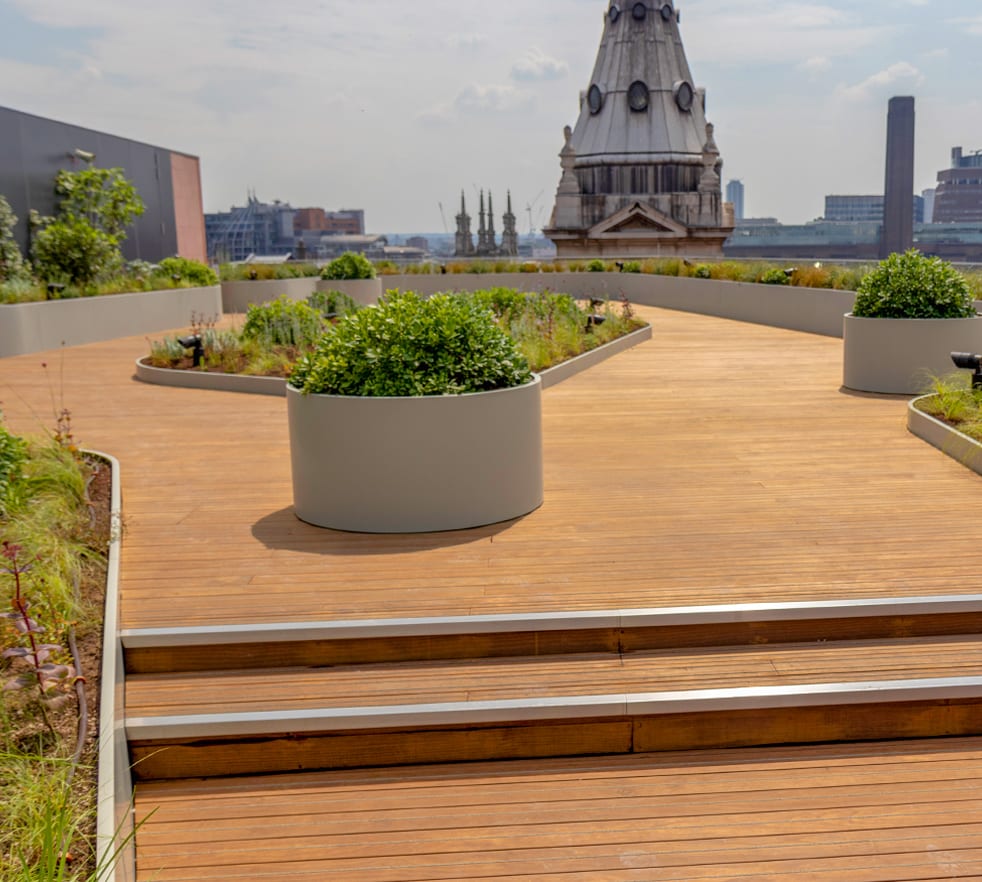
The sustainable alternative to exotic woods
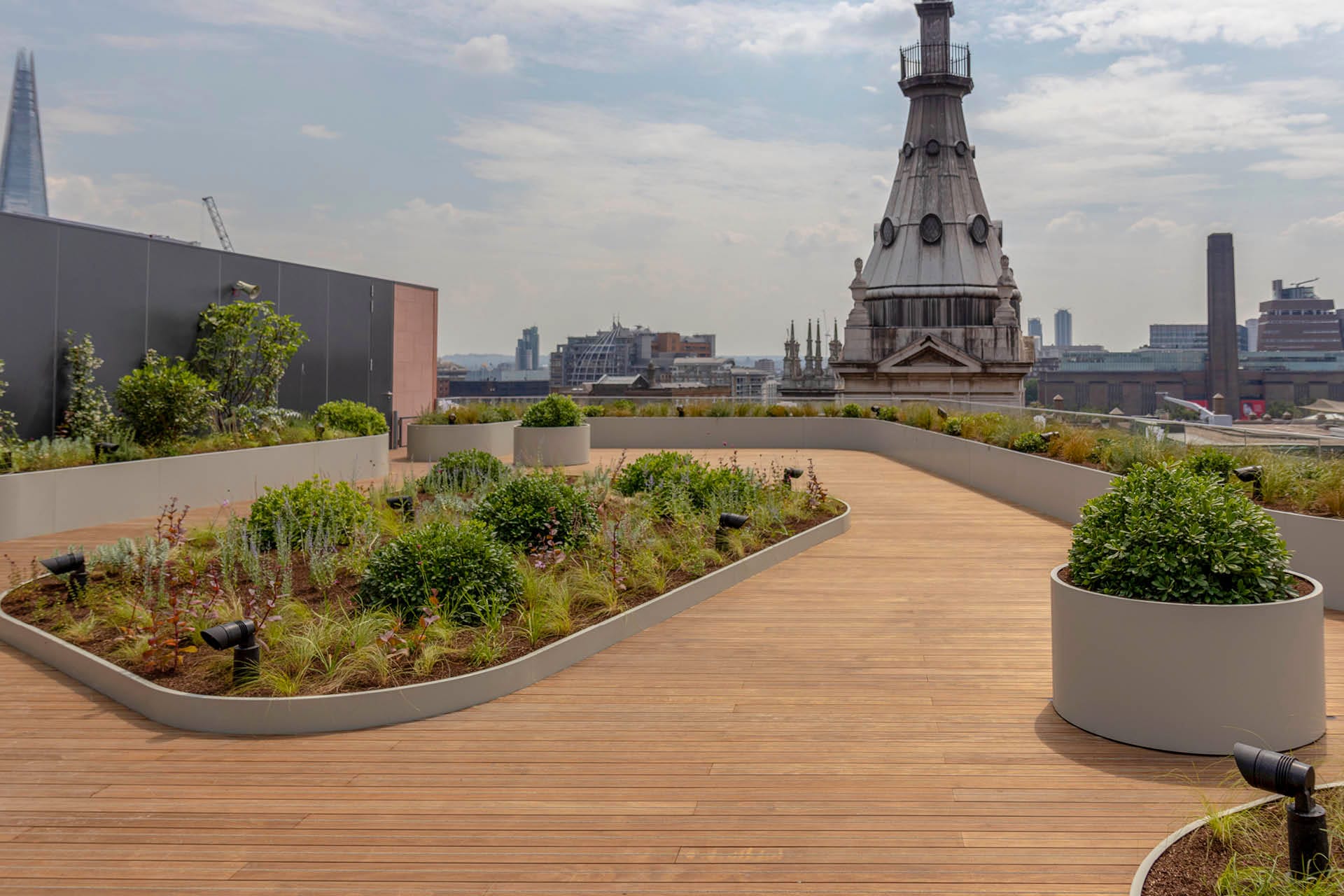
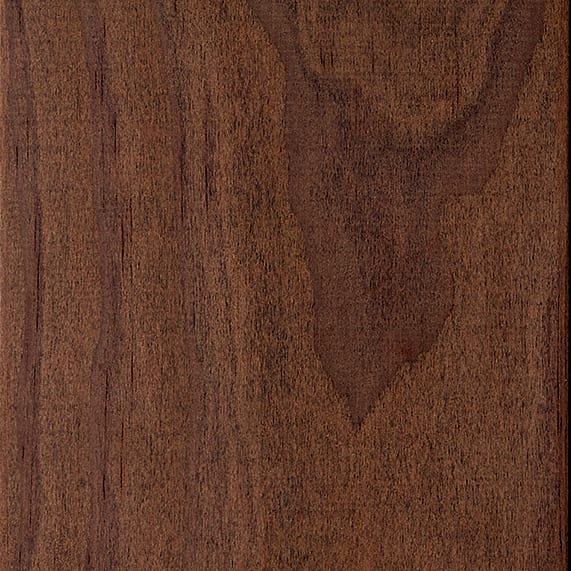
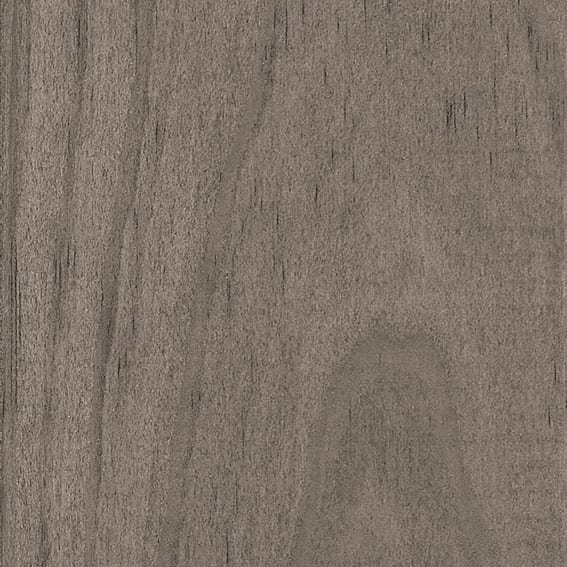
- Knot-free, intense brown hue: Kebony Clear features a knot-free surface and a deep, homogeneous dark brown hue, reminiscent of the finest tropical species — for decks and cladding with immediate and natural elegance.
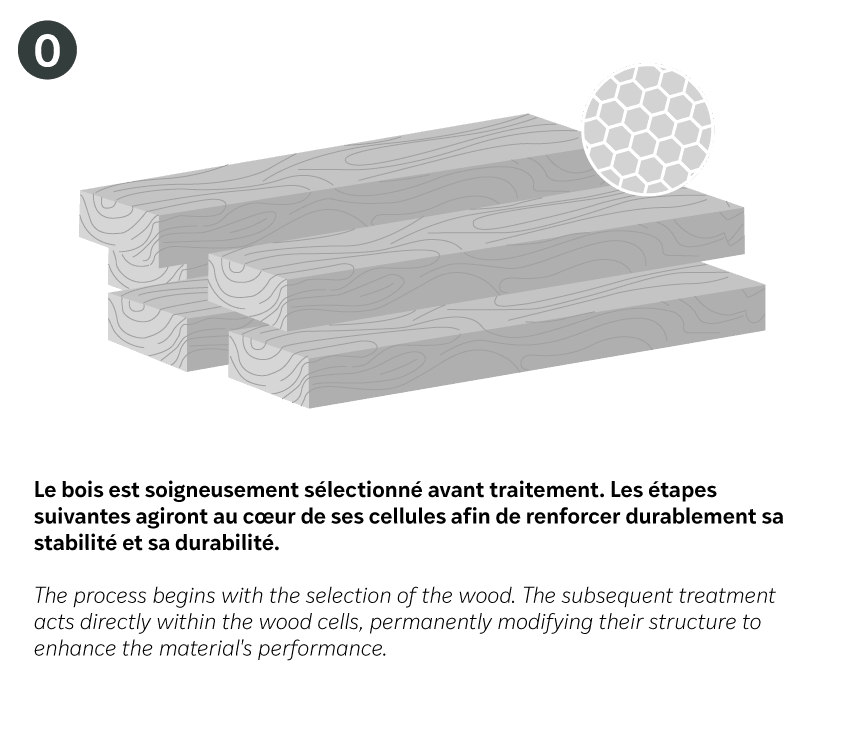
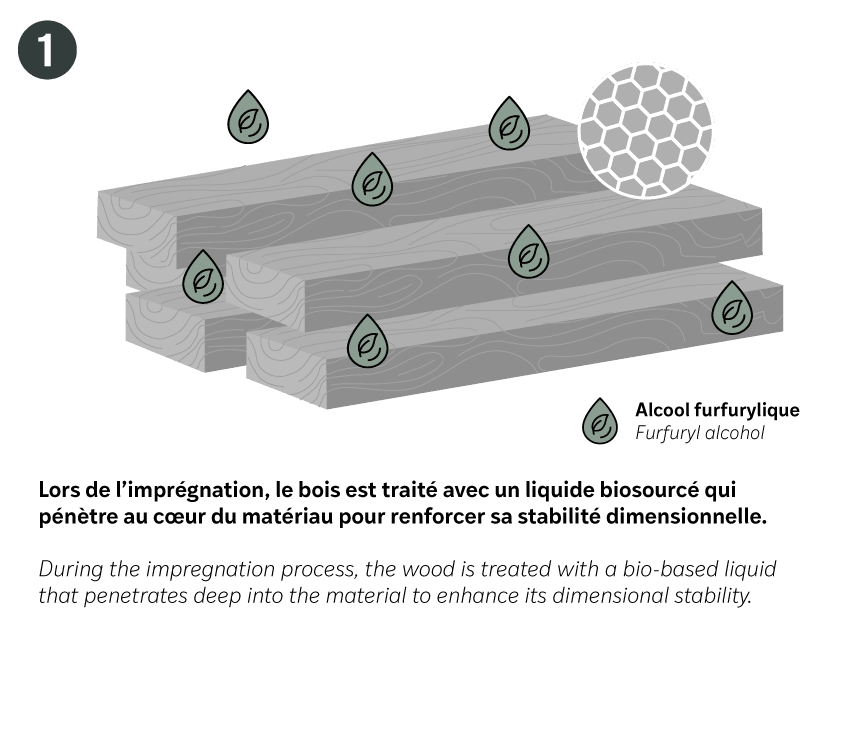
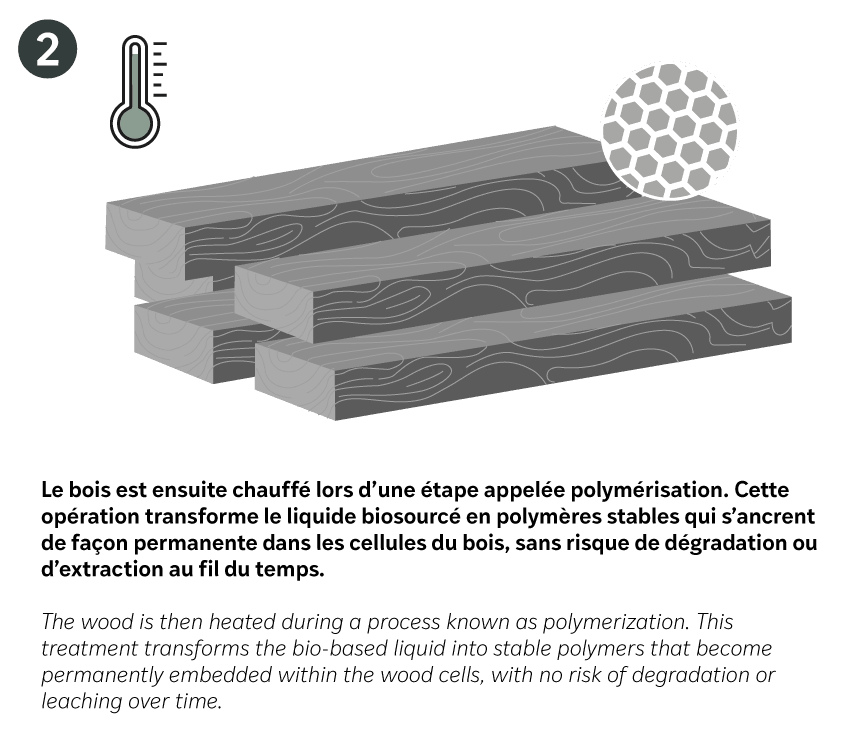
- Furfurylation: a 100% plant-based process: The wood is impregnated with furfuryl alcohol, a compound derived from plant agricultural waste, which polymerizes within the wood cell walls. The result: increased density, enhanced stability, and intrinsic durability — without biocides, without toxic chemicals.
- Increased mechanical resistance: Furfurylation permanently swells the wood cell wall, increasing its hardness and resistance to indentation, warping, and crushing — common defects with tropical woods, eliminated here at the source.
- Fast and clean installation: Compatible with the Grad® system, clip fastening on an aluminum substructure ensures installation without visible screws, a perfectly aligned finish, and hassle-free installation on site, for both decking and cladding.
- FSC-certified wood from sustainable forests: Radiata pine comes from sustainably managed FSC-certified plantations. The furfurylation process valorizes plant agricultural waste — a double loop of renewable resources, without deforestation.
Wood aging
Upon installation, Kebony Clear displays a rich and deep dark brown hue, characteristic of furfurylation — a captivating color reminiscent of Ipe or Teak, without their environmental impact. Natural color variations, slightly darker in places, may appear on the surface: this is the signature of the process, a sign of authentic transformation at its core.
Under the action of UV rays and climatic cycles, the board gradually evolves towards a natural and homogeneous silver-grey patina. This aging may be accompanied by slight superficial cracks — a purely aesthetic phenomenon, with no impact on the material’s performance. At the beginning of exposure, rainwater runoff may show a slight dark coloration on adjacent surfaces: a temporary effect that disappears over time.
Maintain the initial hue
Applying a suitable saturator, renewed according to exposure, helps maintain the original deep brown hue. For decks, the slightly curved profile promotes water drainage and limits surface fouling.
Routine maintenance
A semi-annual cleaning with water and neutral soap is sufficient to maintain the surface — without acidic or alkaline products, which are incompatible with furfurylated wood. No chemical preservation treatment is necessary to maintain the material’s performance over time.
Allow to age naturally
Without maintenance, Kebony Clear evolves towards its silver-grey patina progressively and naturally — an elegant result that requires no intervention, for an authentic and maintenance-free facade or deck.

Plant-based Furfurylation
An alcohol derived from agricultural waste polymerizes within wood fibers: no biocides, no toxins.

Increased Resistance
Permanently reinforced cell wall: hardness, stability, and resistance comparable to tropical woods.

Exotic, Knot-free Hue
Deep brown and homogeneous surface: the elegance of tropical species, without their environmental impact.