Accoya: when science reinvents wood.
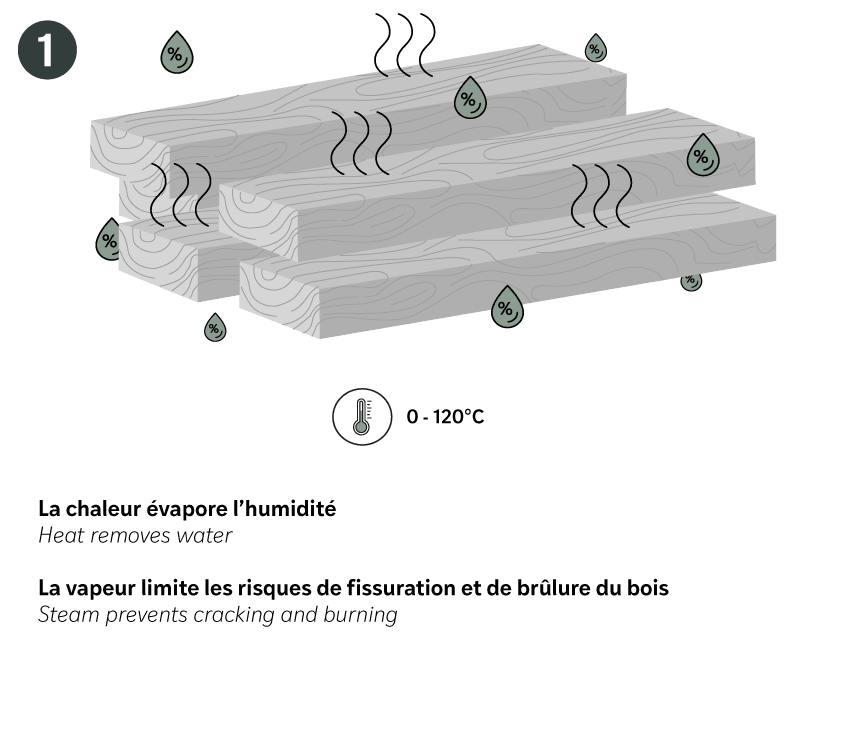
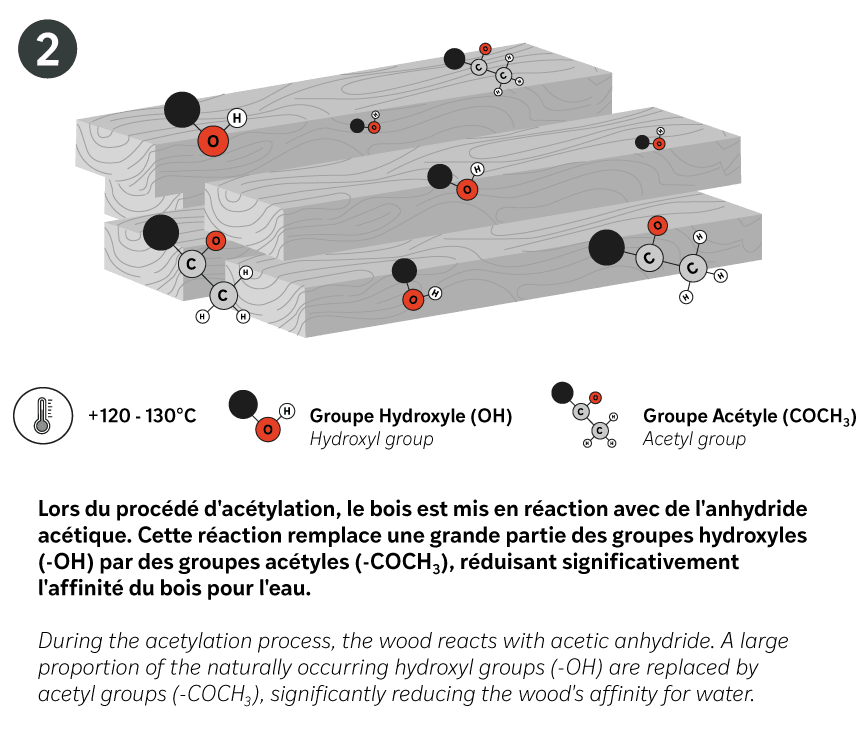
Made from acetylated radiata pine — a molecular reaction at the very heart of the wood, without harmful chemicals — Accoya stands out as the benchmark wood material for the most demanding facades and decks.
Unrivaled stability
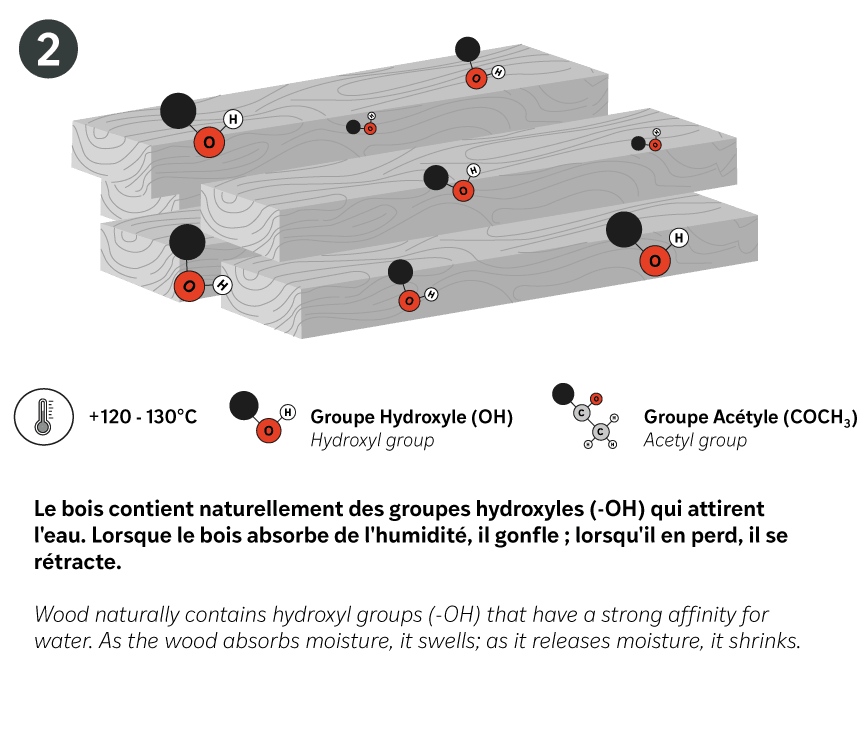
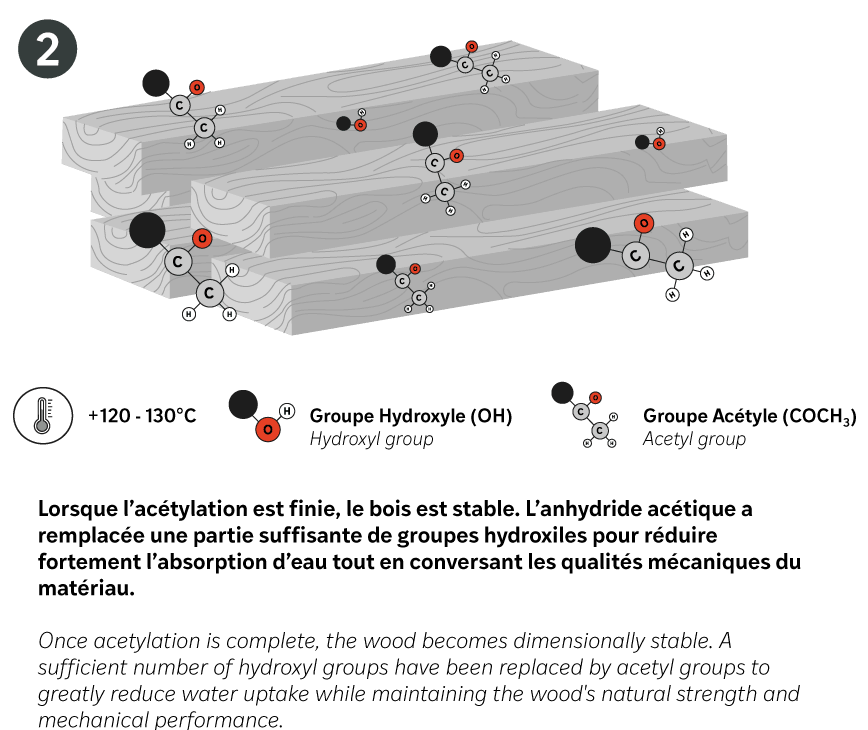
- Unrivaled dimensional stability: Acetylation reduces the wood's interaction with water at a molecular level — boards do not swell, shrink, or warp. Expansion is 3 to 4 times lower than traditional woods, even in extreme climatic conditions.
- Deeply rot-proof: Accoya is treated throughout — right to the core of the board. It can therefore be machined, cut, and reworked on site without ever compromising its durability. A performance that surface treatments cannot offer.
- A natural and non-toxic process: Acetylation uses acetic anhydride derived from acetic acid — the same compound as vinegar. No biocides, no toxic additives. Healthy wood for people, animals, and the environment.
- Fast and clean installation: Compatible with the Grad® system, clip fastening on an aluminum substructure ensures installation without visible screws, a perfectly aligned finish, and hassle-free on-site installation.
- Cradle to Cradle Gold, FSC, and PEFC certified: Accoya combines the most demanding environmental certifications — sourced from non-toxic PEFC certified forests, 100% recyclable, and one of the few construction materials certified Cradle to Cradle Certified® Gold.
Wood aging
The naturalness of wood, embraced to the fullest.
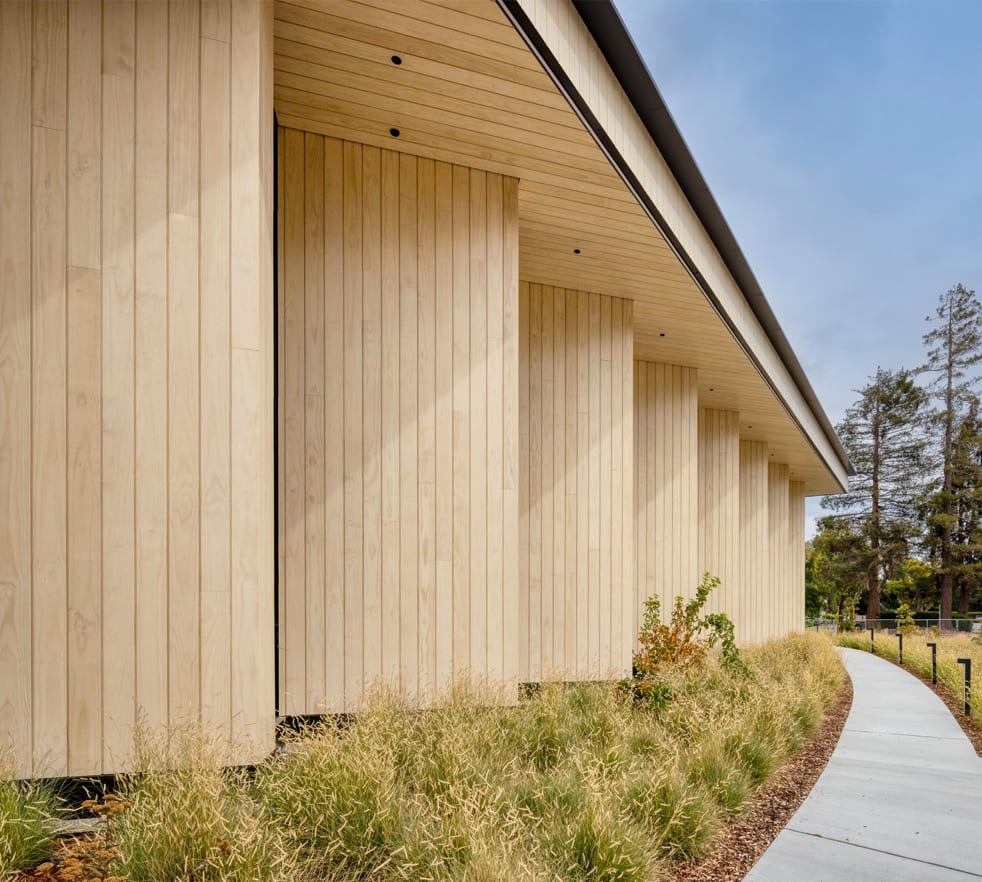
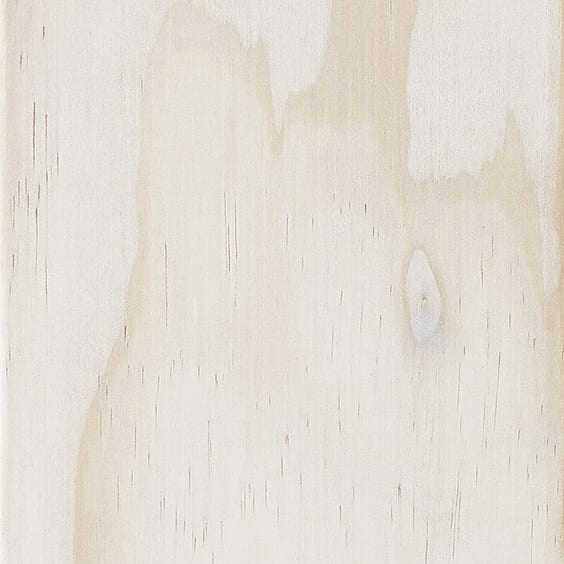
Upon installation, natural Accoya displays a bright and subtle cream-white hue, characteristic of acetylated radiata pine. Its fine grain and smooth surface give it a contemporary and refined look, immediately visible on facades.
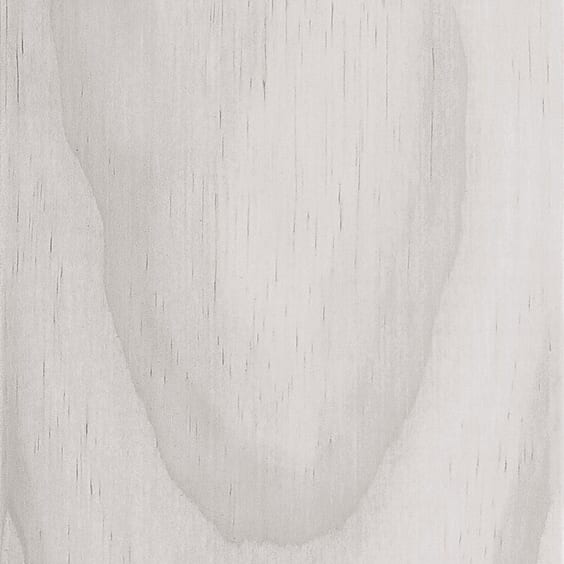
Under the action of UV rays and climatic cycles, the board gradually evolves towards a natural silver-grey — a noble patina that can, however, settle unevenly depending on exposure, with shaded areas greying more slowly. This is the nature of natural wood, living and authentic.
Maintain the initial shade
Regular application of a stain or tinted anti-UV oil helps maintain the original light shade and slow down greying. Finish maintenance is necessary to preserve the appearance — but never to preserve the wood’s durability, which is acquired through acetylation.
Routine maintenance
Periodic cleaning with water and a soft brush is sufficient to maintain the surface. In case of mold in damp areas, a solution of hot water and white vinegar is recommended — without cleaners with a pH higher than 9, which are incompatible with acetylated wood.
Allow to age naturally
For homogeneous and controlled greying from installation, applying a pre-greying agent before installation is recommended — it allows for a uniform transition to the silver patina, including in less exposed areas.

Molecular acetylation
A reaction at the heart of the wood: no biocide, no toxins, intrinsic and permanent durability.

Exceptional stability
Expansion 3 to 4 times lower than traditional woods: boards remain straight, season after season.

C2C Gold & PEFC Certified
Non-toxic, 100% recyclable: one of the most demanding environmental certifications in the world.