Thermo-spruce: the lightness of Nordic softwood, elevated to the rank of exceptional cladding.
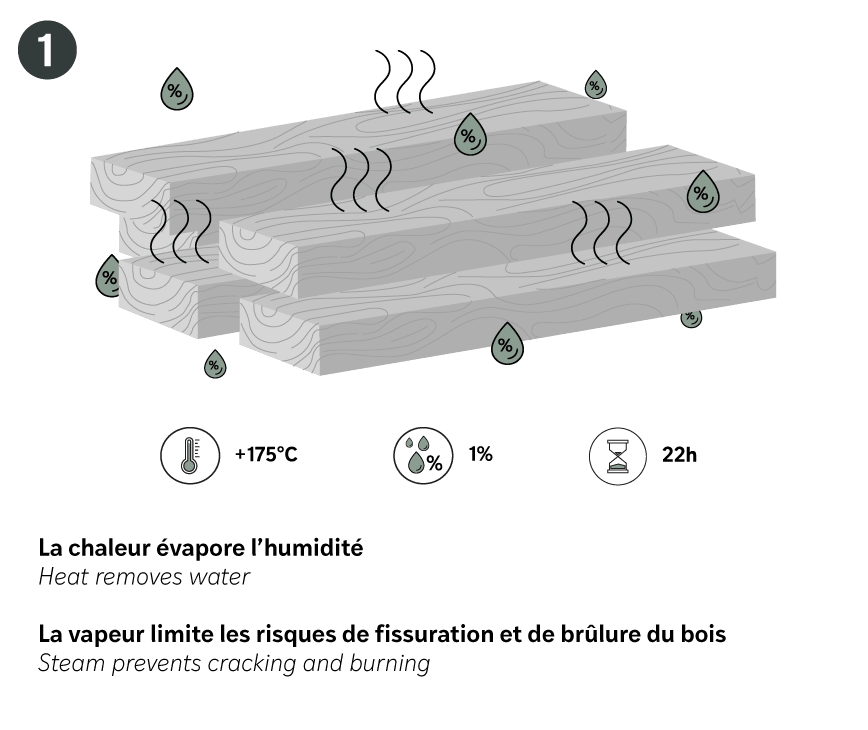
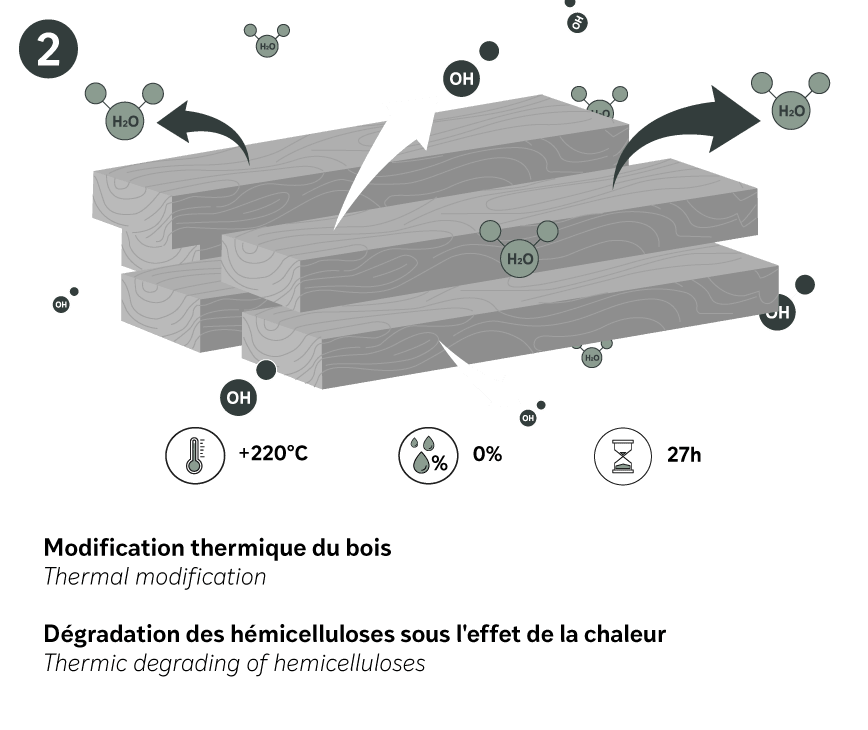
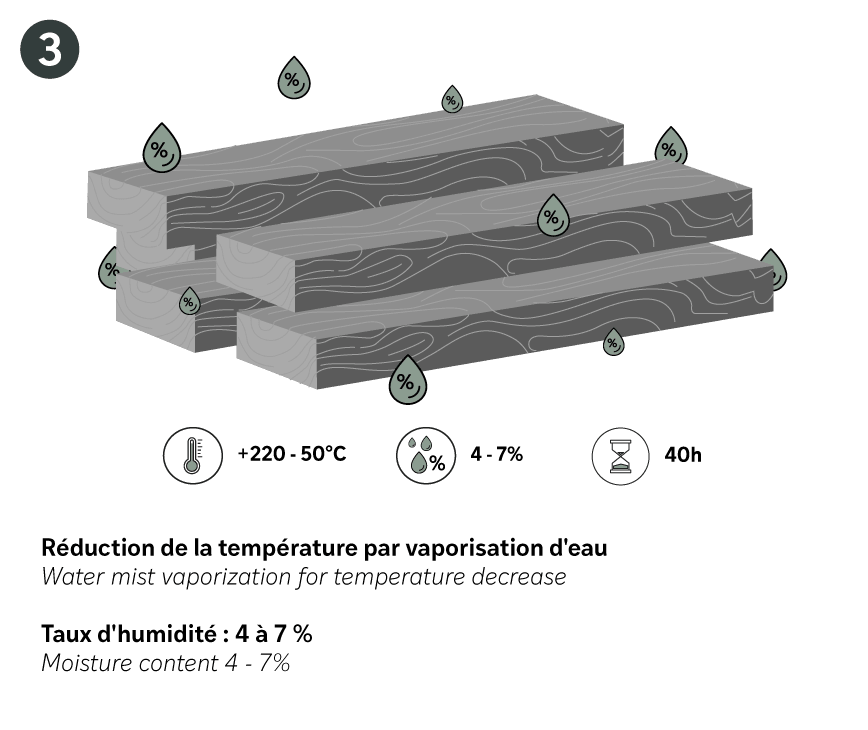
Thermally treated at 212°C under steam, without any chemical products, modified spruce gains in stability, durability, and depth of color for natural, contemporary, and durable facades.
Natural stability
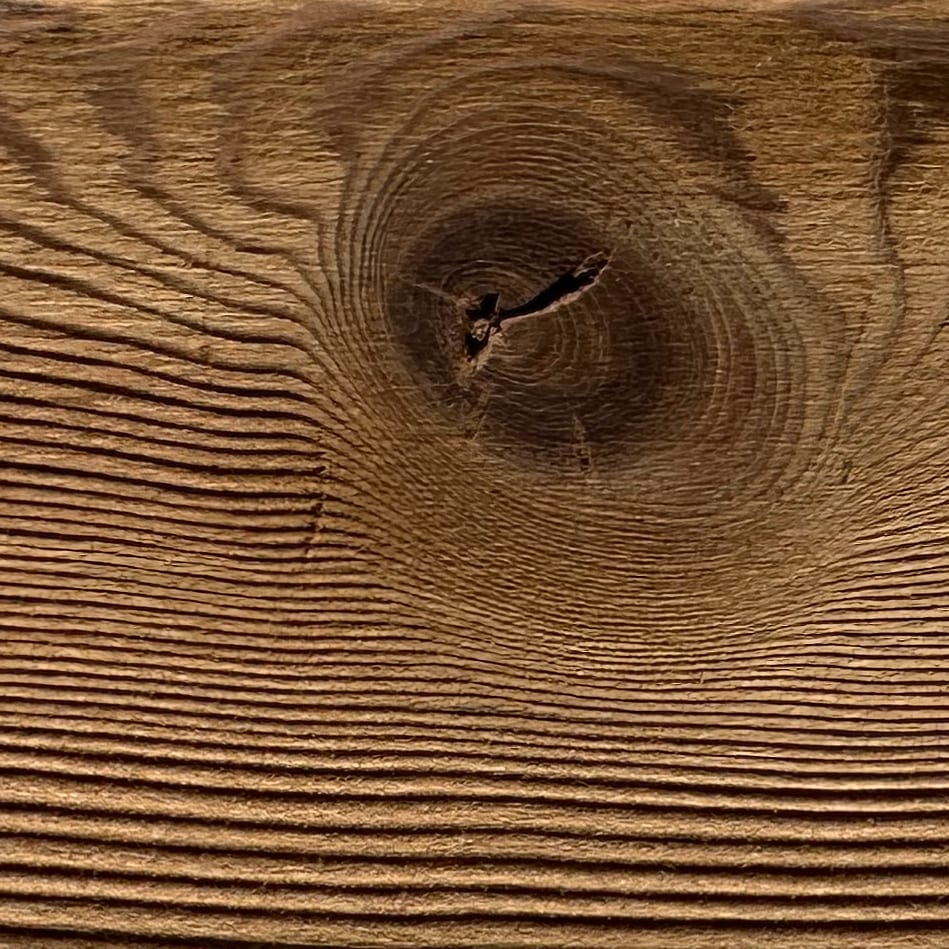
- Fine grain for refined facades: Selected for the quality of its grain and the regularity of its fiber, thermo-spruce presents a homogeneous and matte surface — a refined finish that adapts equally well to contemporary architectures and more traditional projects.
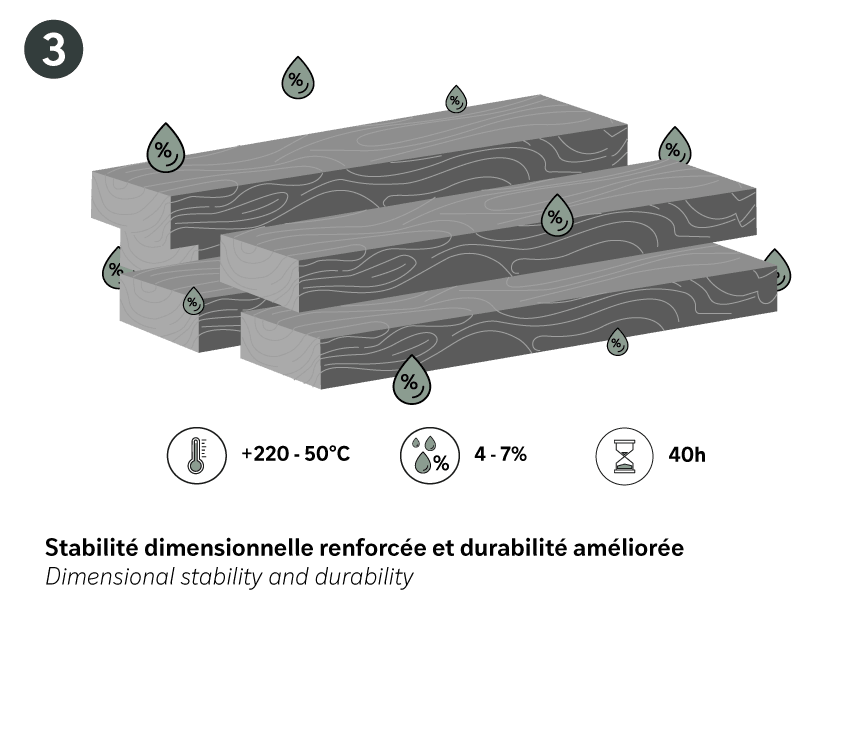
- Exceptional dimensional stability: Thanks to its low hygrometric balance, thermo-spruce offers excellent dimensional stability and retains its shape much better than untreated wood — the boards do not move, do not warp, regardless of climatic cycles.
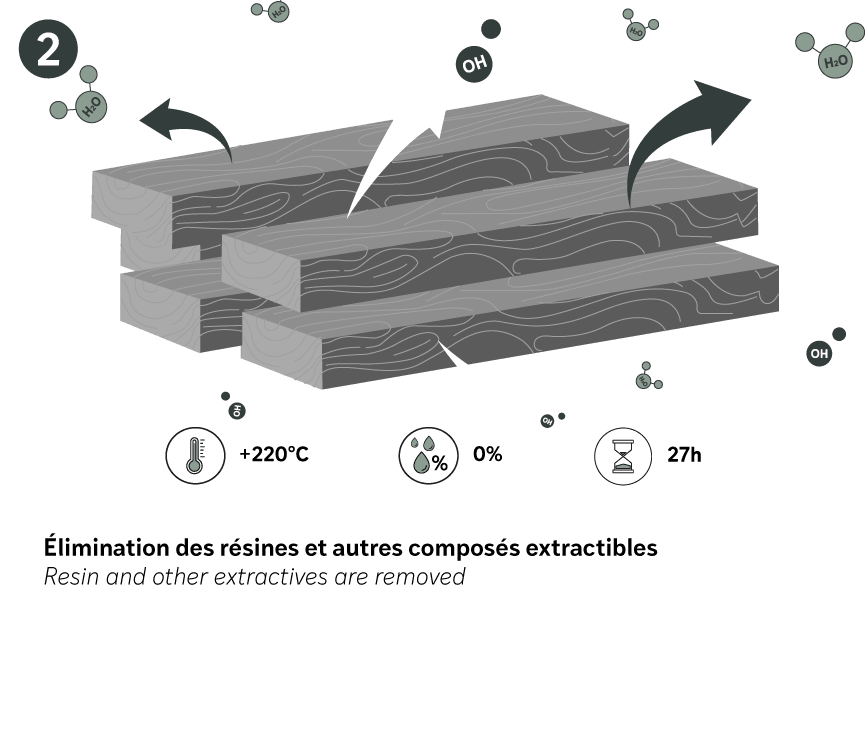
- Resin-free, constraint-free: Thermal treatment gives spruce hydrophobic characteristics that limit expansion and contraction phenomena, while eliminating resins — a clean, stable board, with no exudation on the facade.
- Quick and clean installation: Compatible with the Grad® system, clip fastening on an aluminum substructure ensures installation without visible screws, a perfectly aligned finish, and hassle-free installation on site.
- 100% natural PEFC certified wood: Spruce comes from sustainably managed Nordic forests, and the thermal treatment respects the environment — no added chemicals, no sacrifice on performance.
Wood aging
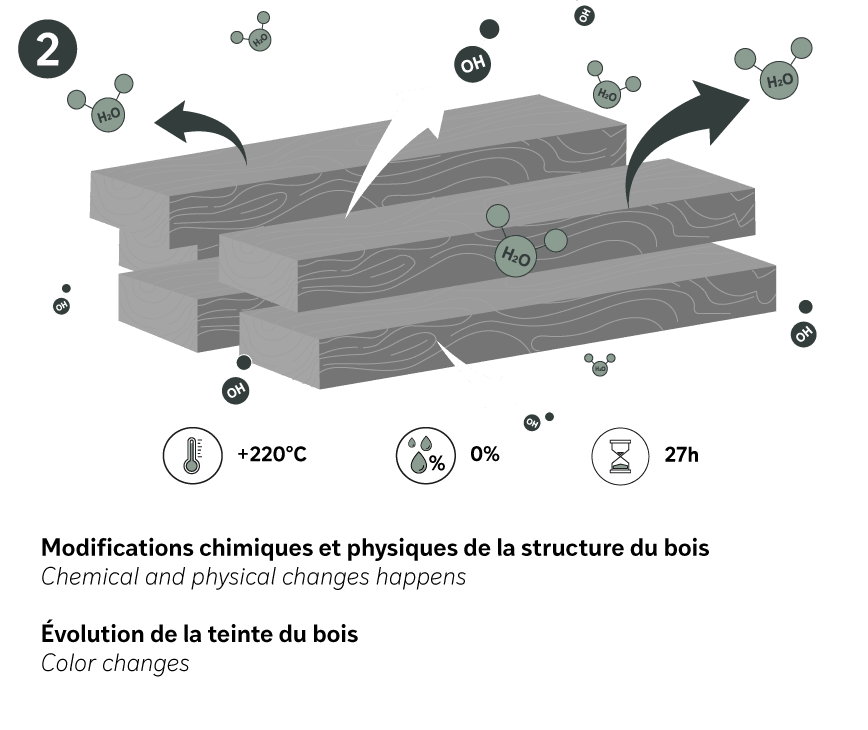
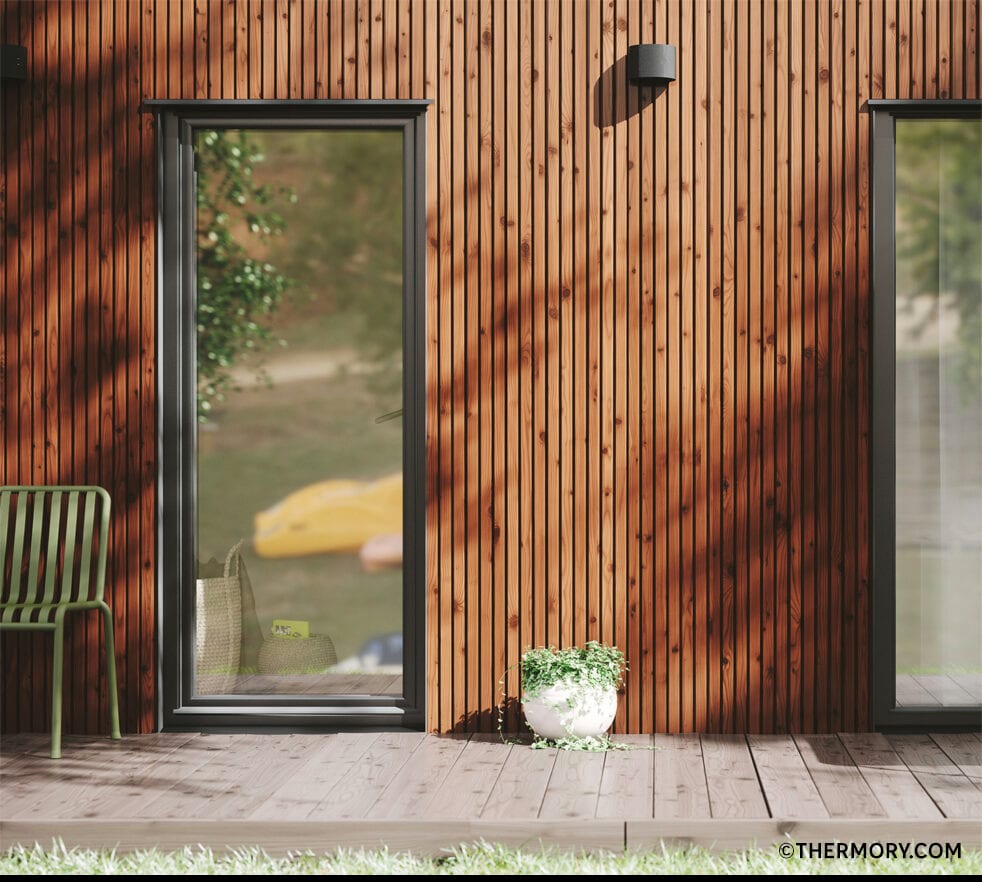
Upon installation, thermo-spruce displays a warm and homogeneous honey-brown hue, a result of the lignin caramelization induced by thermal treatment. Its fine grain and regular surface give it a matte and refined appearance, immediately visible on the facade.
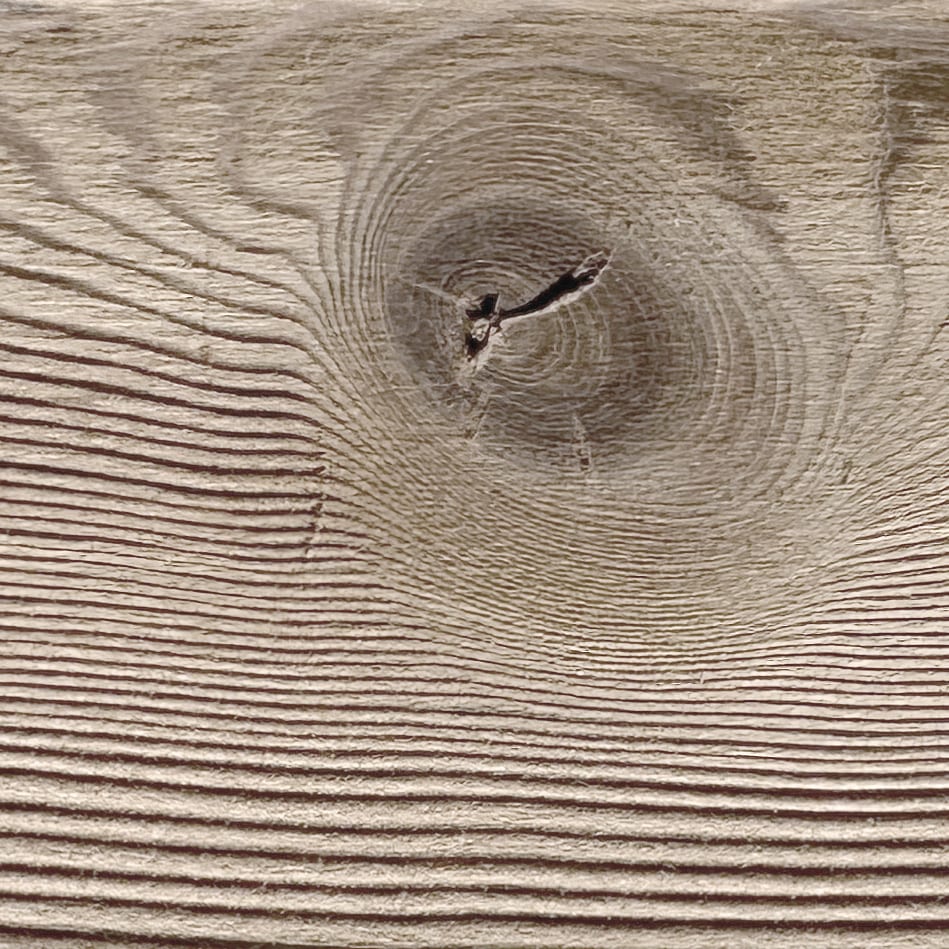
Under the action of UV and climatic cycles, the brown hue gradually evolves towards a silvery gray — this natural and homogeneous patina characteristic of thermally treated woods, without impacting the material’s technical properties.
Maintain the initial color
Cladding can maintain its beautiful uniform brown color through the application of a pigmented and anti-UV surface treatment. A suitable saturator, renewed according to the level of exposure, is sufficient to maintain the original appearance.
Routine maintenance
Thermo-spruce is a solid material that requires no maintenance to withstand the wear of time. To renovate the aged surface, a sufficient pressure wash followed by complete drying before recoating allows for a neat appearance to be restored.
Allow to age naturally
The untreated surface takes on a beautiful silvery-gray color over time — no intervention is necessary, and the technical properties of the wood are preserved intact.

Natural facade
Fine grain and homogeneous surface: a matte and contemporary finish for all architectures.

Treatment at 220°C
Heat and steam transform spruce in depth: resin-free, chemical-free, no compromise.

All-season stability
The boards do not move, do not warp: an impeccable facade even in extreme climates.